A spill kit puts everything for a fast cleanup in one container you can grab and go. Choosing one comes down to three questions: what could spill, how much, and where.
What is inside
Contents vary by size, but most kits include:
- Absorbent pads for soaking up liquid
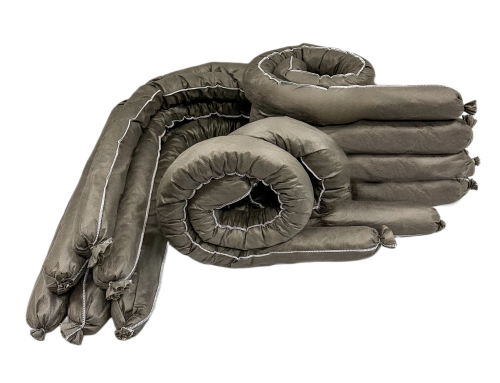
- Absorbent socks for containing the spill
- Pillows in larger kits, for bigger volumes
- Disposal bags and ties for the used absorbents
- Nitrile gloves, and goggles in many kits
- A container that keeps it all together: bucket, bag, drum or cart
For example, our 55-gallon universal drum kit holds 100 pads, 10 socks, 5 pillows, 4 disposal bags, 2 pairs of gloves and 2 pairs of goggles. Our 5-gallon bucket kit holds 15 pads, 2 socks and disposal bags.
What the absorbency rating means
Every kit is rated by how many gallons its absorbents can hold in total. That is different from the container size: our 55-gallon drum kits absorb about 48 gallons.
Pick the size
Size the kit for the largest spill you can realistically expect, usually the biggest container that could leak or tip over in that area.
| Kit | Absorbs about | Typical use |
|---|---|---|
| Bag kits | 5 to 6 gallons | Vehicles, small shops, offices |
| 5-gallon bucket kits | 6 gallons | Workstations, maintenance carts, fueling of small equipment |
| Duffel and fleet kits | 8 to 11 gallons | Truck cabs, service vehicles, crews on the move |
| Drum kits | 16 to 80 gallons | Drum storage, loading docks, fueling areas, plant floors |
| Carts and XL kits | 28 to 146 gallons | Large facilities, tank farms, emergency response |
Rule of thumb: where 55-gallon drums are stored or dispensed, keep a kit rated close to 55 gallons nearby, or a few smaller kits that add up to it.
Pick the type
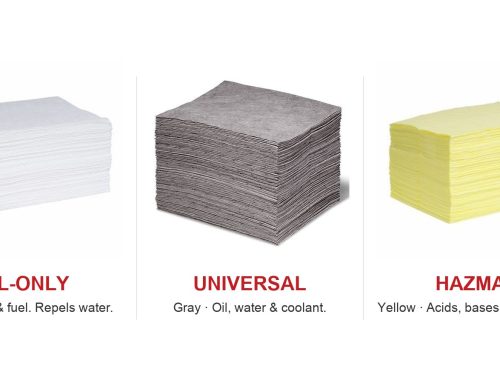
Match the absorbent to the liquid: oil-only for oil and fuel (especially outdoors), universal for mixed shop fluids, hazmat for chemicals. See how the three types compare.
Some spills need a specialty kit: battery acid kits with neutralizer, body fluid cleanup kits, and mercury kits. You will find them in specialty spill kits.
Where to keep it
- Right where spills happen: fueling and transfer points, drum storage, loading docks, maintenance bays and labs.
- In plain sight, clearly labeled, and never locked away or blocked by stock.
- In every vehicle that carries fuel, oil or chemicals.
Industrial stormwater permits often require kits “near areas where spills may occur” (see our stormwater guide), and OSHA treats a small spill your own people can absorb on the spot as an incidental release (see our OSHA guide).
Inspect and restock
- Check each kit monthly and after every use. Make sure the seal is intact and nothing is missing.
- Restock with a refill matched to the kit, so the container is ready again.
- Show new employees where kits are and how to use them.