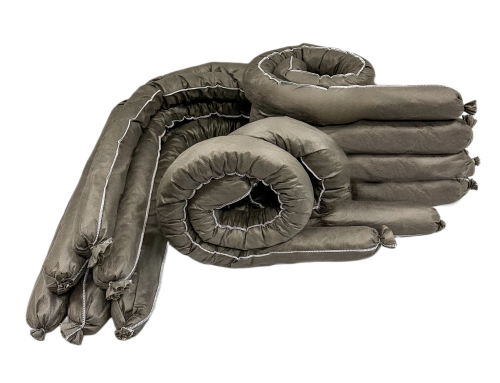
Absorbent pads, socks, pillows and booms come in three families: oil-only, universal and hazmat. They are color-coded, so anyone on a crew can grab the right one. Picking the wrong one usually means wasted absorbent; with chemicals it can mean a pad that doesn’t hold up. Here is how to choose.
| Type | Color | Picks up | Best for |
|---|---|---|---|
| Oil-only | White | Oil, fuel and other petroleum products. Repels water. | Outdoors, rain, on water, marinas, fueling areas |
| Universal | Gray | Oil, water, coolant and most non-aggressive fluids | Shops, maintenance and plant floors with mixed fluids |
| Hazmat | Yellow | Acids, bases and aggressive chemicals, plus everyday fluids | Labs, chemical storage, battery rooms, anywhere chemicals are handled |
Oil-only absorbents (white)
Oil-only absorbents are made from polypropylene that attracts oil and repels water. On a wet surface or on water they soak up the oil and leave the water behind, and they float even when full. That makes them the choice for outdoor spills, rainy days, boats and marinas, and parking lots where oil mixes with puddles.
Universal absorbents (gray)
Universal absorbents soak up nearly everything: oil, water, coolant, cutting fluids and mild cleaners. Gray hides dirt, so they look clean longer on a shop floor. Use them indoors where leaks are a mix of fluids. Outdoors in the rain they will fill up with water, so oil-only is the better pick there.
Hazmat absorbents (yellow)
Hazmat absorbents are built to hold up against acids, bases and other aggressive chemicals, and the bright yellow signals “caution” to anyone nearby. They also absorb oil and water, so some facilities stock hazmat only to keep things simple.
Check before you use: a few chemicals, such as hydrofluoric acid and some strong oxidizers, need special handling. Check the chemical’s Safety Data Sheet and the absorbent’s compatibility before you start, or call us. For battery acid, a neutralizer kit treats the acid before you clean it up.
Pad weight: light, medium or heavy
- Light weight pads are thin and inexpensive. They are good for wiping parts, small drips and lining shelves.
- Medium weight is the everyday choice for drips and small spills.
- Heavy weight pads hold the most per sheet, so you use fewer of them on a bigger spill.
“Bonded” and “sonic bonded” pads have layers fused together so they shed less lint and hold together when wet. Economy and contractor-grade pads cost less for high-volume use.
Pads, rolls or king pads?
- Pads (about 15″ x 18″ or 15″ x 19″) are the most versatile. Grab one, use one.
- King pads (30″ x 30″) cover a larger spill or the floor under a machine.
- Rolls (15″ or 30″ wide, 150″ long) line walkways and work areas, or tear off to any length.
Need socks, pillows or booms instead? See which shape fits which job.