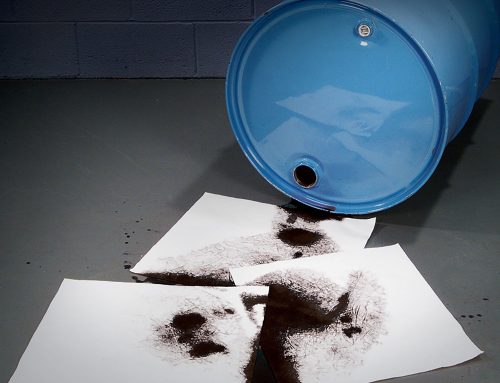
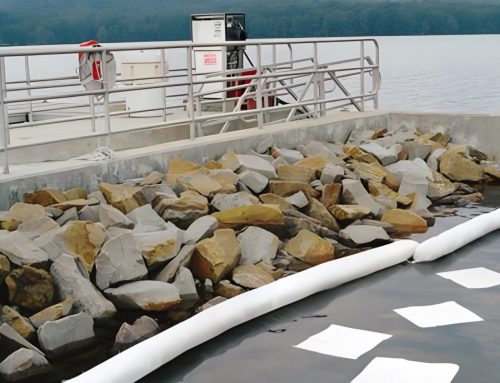
Motor oil, hydraulic fluid and fuel soak into concrete fast, and a fresh spill is slippery. The faster you contain and absorb it, the less of a stain you will be fighting later. This works for a garage, a shop floor or a loading dock.
Short version: stop the leak, ring the spill with a sock, cover it with oil-only or universal pads, pick up and bag the used absorbents, then scrub what is left with a degreaser and pick up the rinse water. Never hose oil toward a drain.
What you need
- Nitrile gloves, and eye protection if anything could splash
- Absorbent socks to ring the spill
- Absorbent pads for the liquid on top
- Granular absorbent for a thin film or residue (a spill kit often includes some)
- Heavy-duty disposal bags and ties
- A degreaser or strong dish detergent and a stiff nylon brush
A spill kit keeps all of this in one place, which helps when you have only a minute or two to react.
Step by step
- Stop the source. Turn off the equipment, set the container upright or plug the leak. If it is fuel, keep sparks, flames and running engines away and open the garage door for air.
- Protect the drains. If a floor drain or storm drain is nearby, block it first with a sock or a drain cover. Storm drains usually lead straight to creeks, rivers or the ocean without treatment.
- Contain it. Lay a sock around the edge of the spill so it can’t spread.
- Absorb it. Lay pads over the liquid and press them down with your foot. Oil-only (white) or universal (gray) pads both work on oil. Replace pads as they fill. Work from the outside in.
- Pick up the film. Sprinkle granular absorbent over what is left, work it in with a broom, give it a few minutes, then sweep it up.
- Bag it. Put used pads, socks and granular into a heavy-duty bag and tie it closed.
Getting the stain out
Once the liquid is gone, a dark stain usually remains in the pores of the concrete.
- Scrub the area with a concrete degreaser or a strong dish detergent and a stiff nylon brush.
- Let it sit for a few minutes, scrub again, then pick up the dirty water with absorbent pads or a wet/dry vacuum instead of rinsing it down a drain.
- Old stains can take two or three rounds. Some never fully disappear, so the real fix is catching drips before they land.
Don’t use gasoline or other solvents to clean a floor. They add fire risk and push the oil deeper into the concrete.
Disposing of used absorbents
How you dispose of oily absorbents depends on what they soaked up and where you are. At home, take them to your city or county household hazardous waste program. Businesses should follow their state’s rules for used oil and hazardous waste, which can be stricter than federal rules. When in doubt, call your local environmental agency or waste hauler. More detail: how to dispose of used absorbents.
Preventing the next one
- Park over an absorbent garage mat so drips never reach the concrete.
- Put a drip pan or a pad under leaking equipment until it is repaired.
- Keep a small spill kit where you change oil or transfer fuel, and restock it after every use.
Running a business? Spill cleanup and drain protection may also be part of your stormwater permit. See our stormwater spill prevention guide.