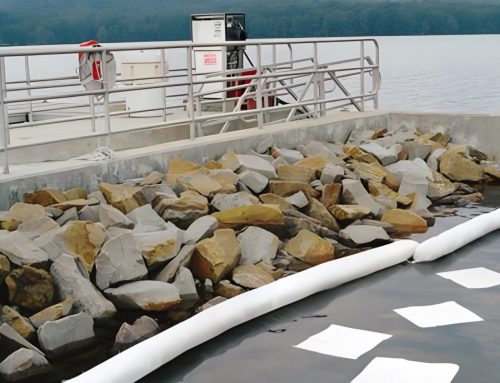
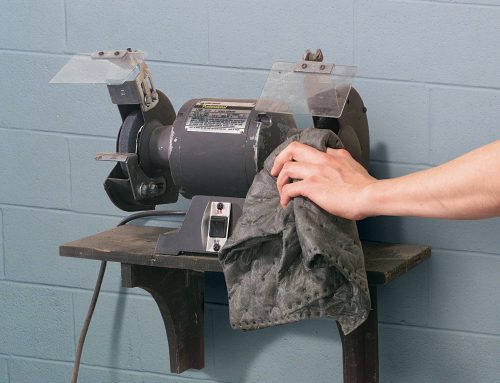
A used absorbent takes on whatever it soaked up. A pad full of water from a leaking pipe is ordinary trash. The same pad full of gasoline or solvent may be hazardous waste. So disposal starts with one question: what did it absorb?
Please note: this is general guidance, not legal advice. Rules differ by state and city, and a business is responsible for classifying its own waste. When in doubt, ask your waste hauler, your local environmental health agency or your state environmental agency.
Start with what it soaked up
| It soaked up | Usually handled as | Notes |
|---|---|---|
| Water, mild cleaners, other non-hazardous liquids | Regular trash in most places | Let excess water drain or dry out first. |
| Motor oil, hydraulic oil, gear oil | Used-oil rules first (see below) | Some states, including California, treat oily debris as hazardous waste. |
| Gasoline, solvents, paint thinner | Often hazardous waste | Many are ignitable; the waste has to be classified. |
| Acids, caustics and other chemicals | Often hazardous waste | Check the product’s Safety Data Sheet (SDS). |
| Antifreeze and coolant | Depends on your state | Many areas recycle used antifreeze or treat it as a special waste. |
| Blood and body fluids | Regulated (biohazard) waste | OSHA requires disposal under federal, state and local rules (29 CFR 1910.1030). |
Oil-soaked absorbents: the federal used-oil rule
Under the EPA’s used-oil rules, pads, socks, booms and other materials contaminated with used oil are not regulated as used oil once the oil has been drained or removed so that no visible free-flowing oil remains in or on them (40 CFR 279.10(c)). What that means in practice:
- Drain free oil first. Oil that drips or drains out of saturated absorbents is used oil. Collect it with your used oil and send it for recycling.
- Burned for energy? If your recycler burns the oily absorbents for fuel, they are regulated as used oil.
- Otherwise they are a solid waste, and you still have to decide whether that waste is hazardous (next section).
Some states go further than the federal rule. In California, for example, county guidance for repair shops lists oily debris such as used absorbents alongside used oil and oil filters as hazardous waste. Check your own state’s rules.
Chemical and fuel-soaked absorbents
Anyone who generates a solid waste must determine whether it is hazardous waste, at the point it is generated and before it is mixed with anything else (40 CFR 262.11). A used absorbent can be hazardous because of what it absorbed: for example a flammable fuel or solvent, a toxic chemical, or a chemical that is itself a listed hazardous waste.
- Look at the SDS for what was spilled. Its hazards carry over into the used absorbent.
- Your hazardous waste hauler can help classify the waste, and test it if needed.
- If it is hazardous, manage it under the rules for your generator category. Our hazardous waste storage guide covers containers and containment.
Storing used absorbents until pickup
- Put used absorbents in heavy-duty bags, tie them closed and keep them in a closed container, such as a drum or pail with a lid.
- Keep different wastes apart. Don’t mix oil-soaked pads with chemical absorbents, or hazardous waste with ordinary trash. Mixing can make the whole container hazardous waste.
- Mark hazardous waste containers with the words “Hazardous Waste” and an indication of the hazards, such as “ignitable”. That is a federal requirement (40 CFR 262.15 to 262.17). Your state may require more on the label.
- Keep containers with flammable contents away from heat and sparks, and keep the lids closed.
- Never put used absorbents in a storm drain, and don’t burn them yourself.
At home
For a household spill, such as a car leak in the garage or a spill of mower fuel, bag the used absorbents and take them to your city or county household hazardous waste program. Programs differ in what they accept, so call or check their website first.
Make less waste in the first place
- Use oil-only absorbents outdoors and on water. They pick up oil and repel water, so you aren’t paying to dispose of rainwater. See oil-only vs. universal vs. hazmat.
- Catch drips early. A drip pan or a pad under a leaking fitting is much less waste than a spill across the floor.
- Use the right shape. Socks to contain, pads to absorb, and granular only for the thin film left at the end.
- Reuse what you can. Non-absorbent containment booms and spill pallets wash off and go back into service.